Nine days. No room for undercooked.
24 Hours at UAE Team Camp
Over breakfast, Elisa Longo Borghini mentions that she spent the previous evening going through the race route rather than resting – she’s got media duties in the afternoon, and wants to walk in already knowing the climbs. “It’s a beast,” she says of the Tour de France Femmes avec Zwift. “Really brutal.”
She’s not exaggerating. The women’s Tour, which starts on August 1, is nine stages long, raced on nine consecutive days. Unlike the men's Tour, there are no scheduled rest days to break it up. Every stage begins on legs that will still be carrying the work of the day before. The challenge won’t be avoiding fatigue (that would probably mean you weren't racing hard enough), but learning how to recover quickly enough to perform again tomorrow.
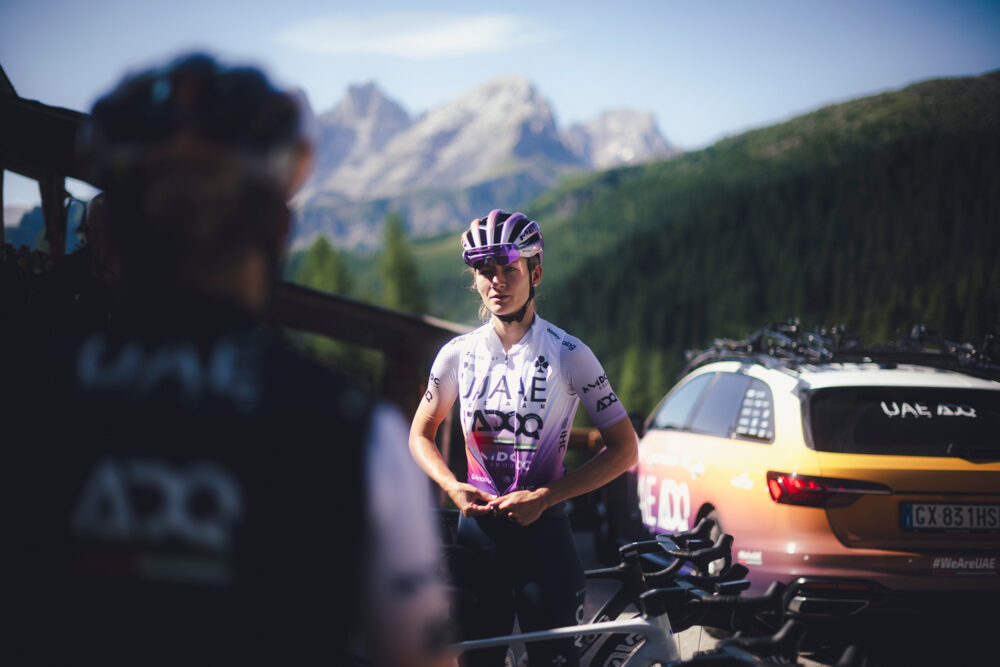
That single objective shapes almost every decision at UAE Team ADQ's final altitude camp.
At close to 1,800 metres above sea level, adaptation can’t be rushed. With less oxygen available in every breath, the body has to work harder during even relatively easy efforts. Over time, that stress can stimulate adaptations that improve endurance back at lower elevations – but only if riders give their bodies enough time to adjust. And everyone adapts differently.
One rider settles in almost immediately; another may take several days before the heaviness begins to lift. Mavi García, who lives and trains at around 2,400 metres, is naturally more comfortable than most, but every rider is monitored in exactly the same way, which turns breakfast into as much a health check as it is a meal. Resting heart rate, blood oxygen saturation, sleep quality and the simple question of how the legs feel all become part of the conversation.
Before anyone clips into a bike, the coaches already have a picture of how each rider has responded to the previous day's workload. Despite that data-driven approach, the hotel couldn't feel further removed from a high-performance laboratory. It's a traditional mountain rifugio, built almost entirely from timber, with carved balconies, polished wooden floors and old paintings that have probably watched generations of hikers and skiers come and go.
At its centre is Achille, the hotel manager, who somehow manages to anticipate almost every request before it's been made. Coffee arrives before cups are empty. A slightly later lunch is mentioned for the following day and he's already disappeared towards the kitchen.
It becomes obvious remarkably quickly that performance isn't built by riders alone.
Mario, the team's mechanic, sees his job in much the same way. Ask him what matters most and he doesn't mention perfectly indexed gears or shaving seconds off a wheel change.
Instead, he talks about trust. His job is to make sure every rider has complete confidence in her bike. Once they roll out onto mountain roads and start descending at speed, the bike has to disappear beneath them. Confidence, at this level, is performance.
Which matters even more on a Sunday in the Dolomites.
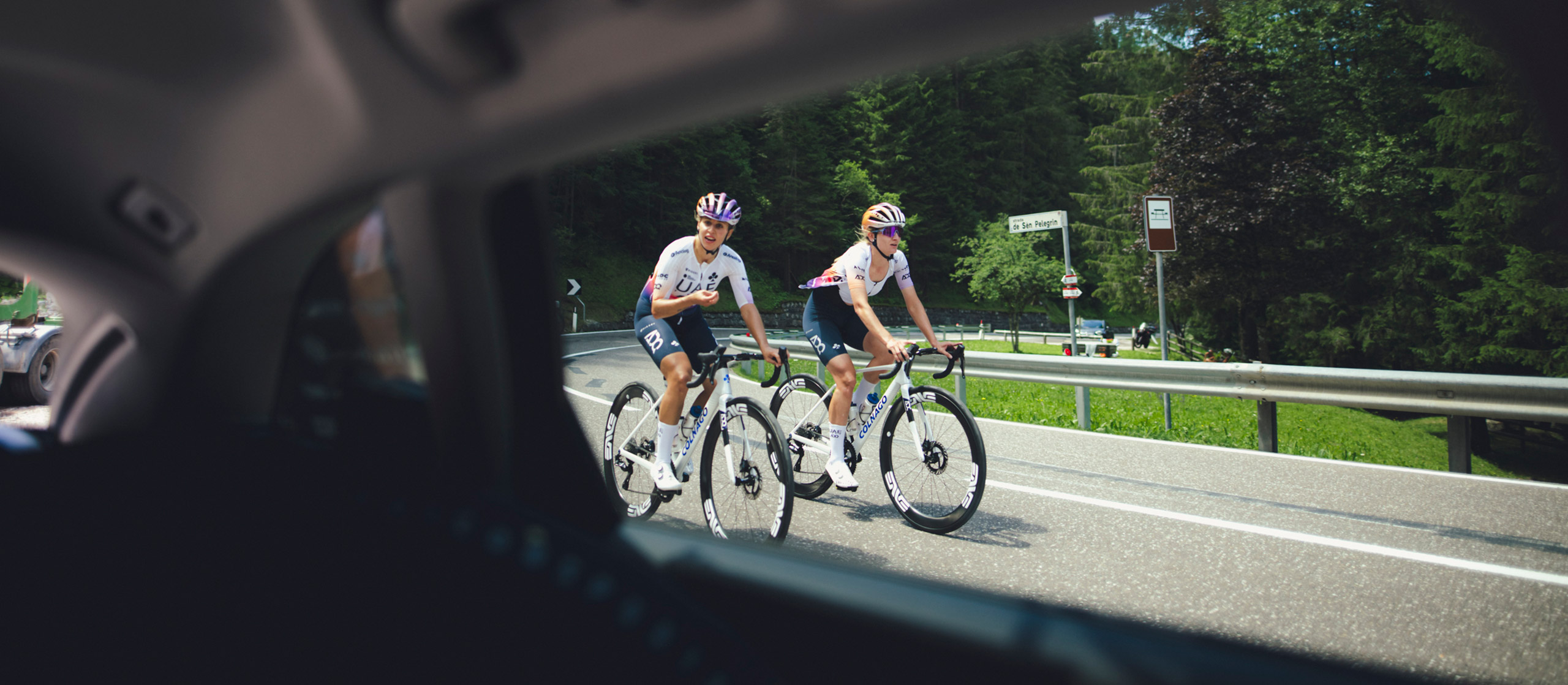
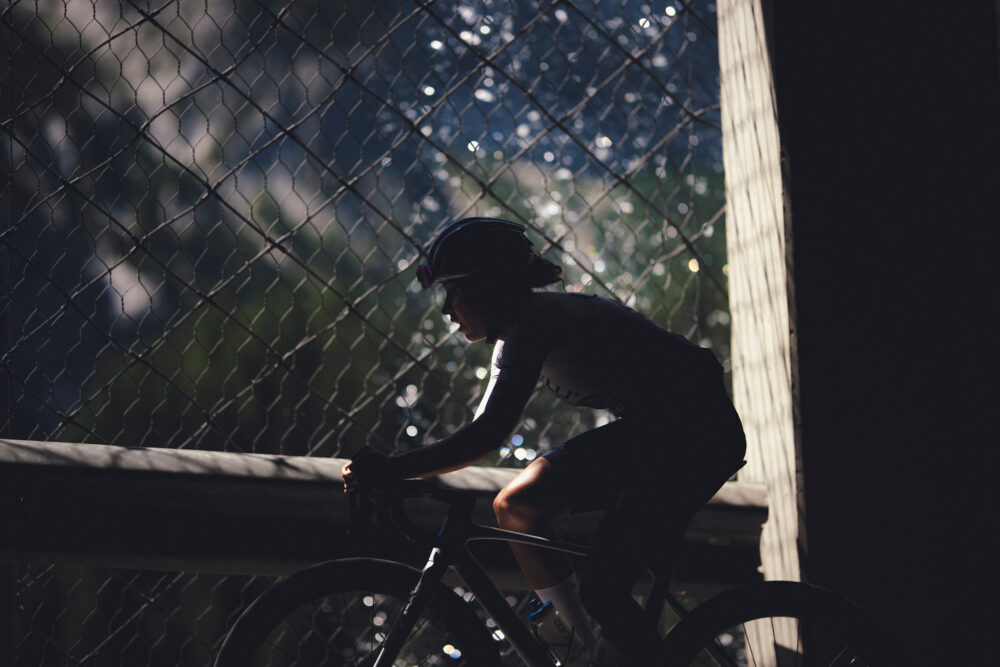
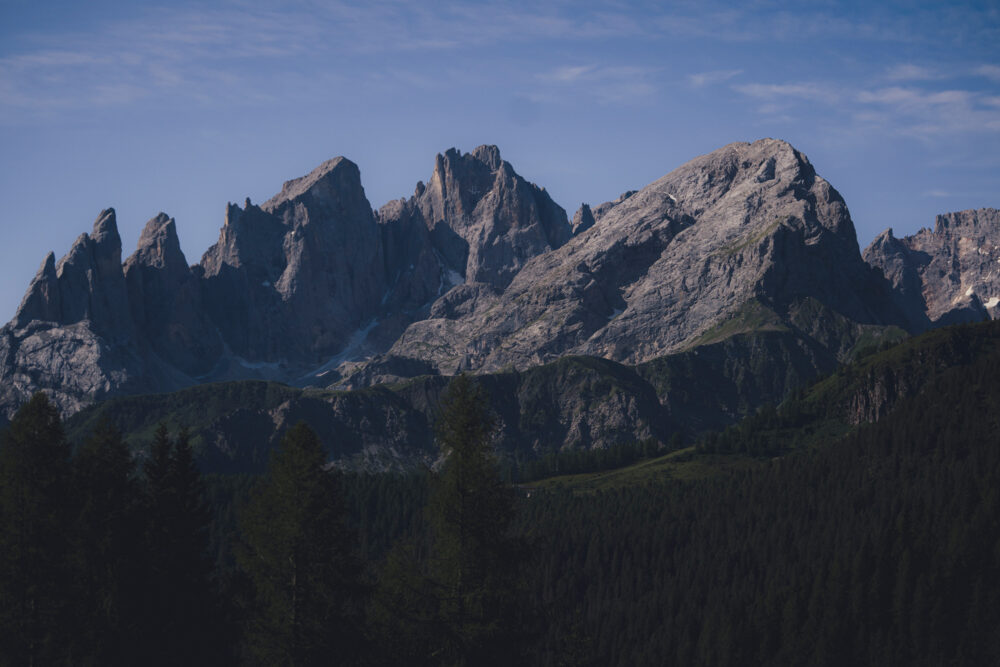
As by late morning, the roads outside have filled with the familiar theatre of a summer Sunday in the Dolomites. Cyclists are ticking famous climbs off bucket lists, motorbikes carve their way through the hairpins, and campervans inch patiently uphill. It's busy enough that riding a team car behind a WorldTour squad looks like an exercise in patience.
The riders seem entirely unfazed.
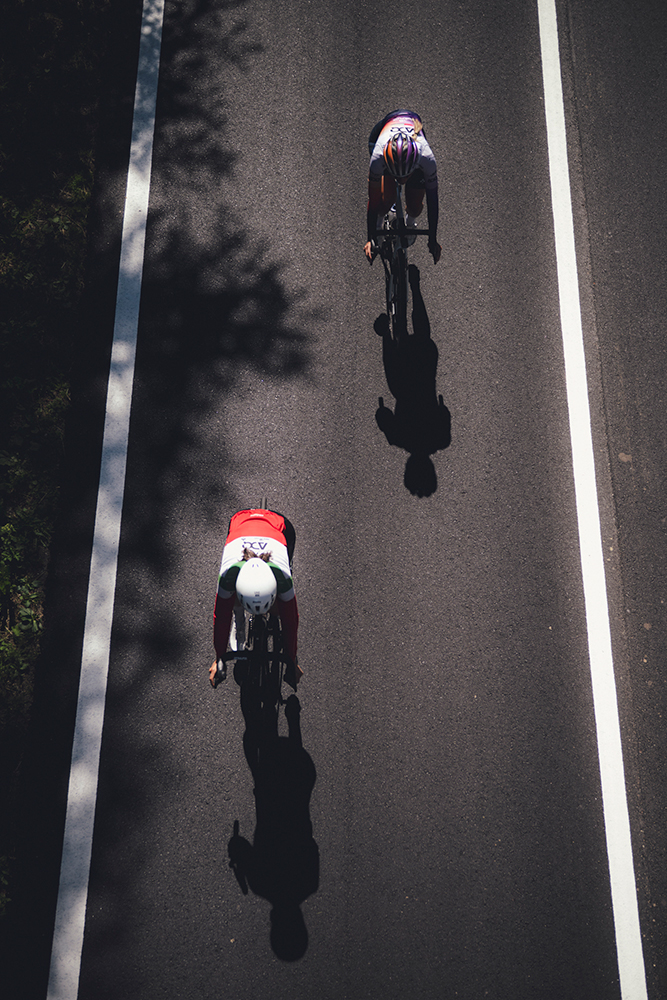
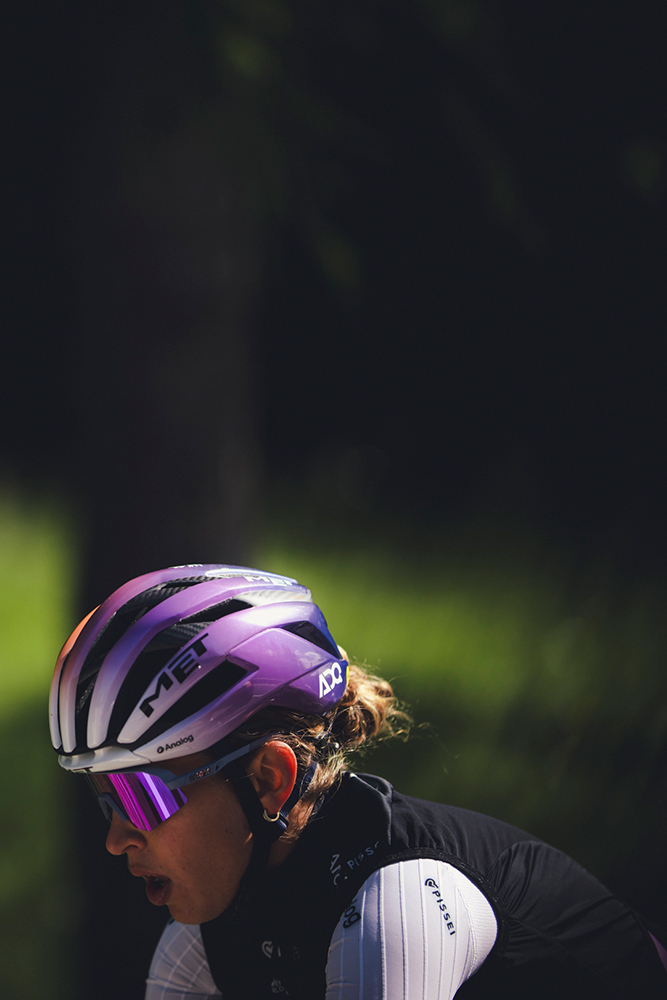
At the top of one of the passes they stop for selfies with fans, chatting easily while phones are passed around. Photographs are taken and everyone smiles. A few minutes later they're back on the bikes, disappearing into another series of race efforts. The ride on paper is long enough on its own, but today's schedule also includes repeated sprints at altitude, where every acceleration demands just a little more than it would closer to sea level. The change from relaxed to relentlessly focused is almost imperceptible.
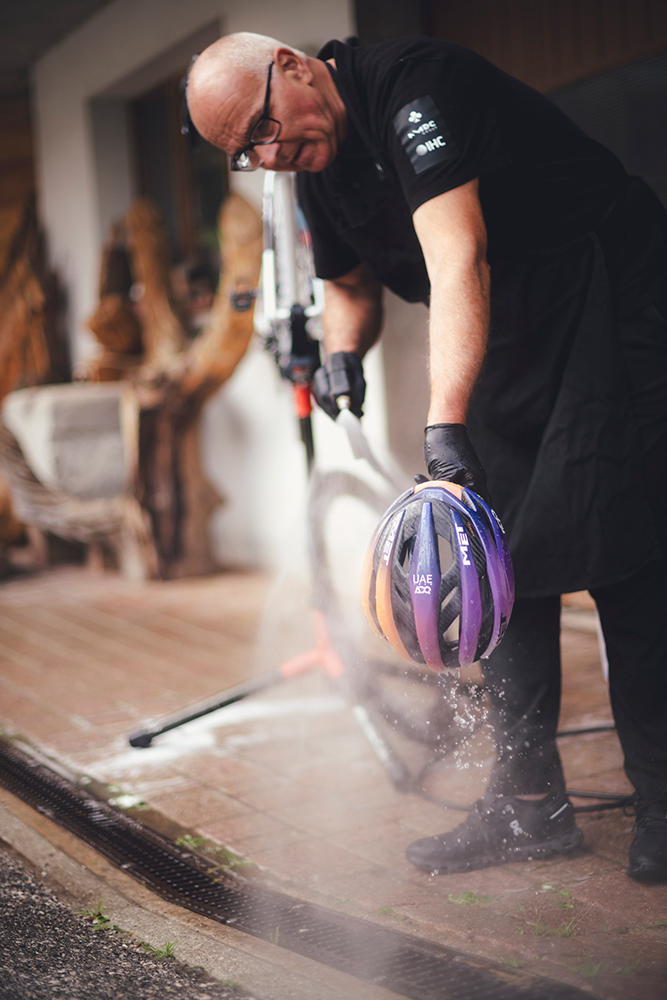
By the time they return to the hotel, bikes, helmets and shoes are washed almost before the riders have unclipped. Within minutes everyone has showered, changed and reappeared in the dining room. Lunch is waiting: a buffet alongside carefully weighed portions of pasta, because even something as ordinary as lunch has a job to do.
The afternoon belongs to recovery. Watching the process unfold, it's impossible not to notice how little of it resembles rest.The team alternates between a paddling pool and a hot tub set up outside the hotel like a small laboratory – because, in many ways, that's exactly what it is.
The goal isn't simply to make sore legs feel better. Alternating between cold and hot water causes blood vessels to repeatedly constrict and dilate, encouraging circulation and helping the body clear some of the metabolic by-products that accumulate after hard efforts.
While research continues into exactly how effective contrast therapy is, many elite teams use it as one piece of a broader recovery strategy. On its own, it isn't a magic solution – but alongside nutrition, sleep and massage, it may help riders arrive a little fresher for tomorrow.
Next comes Tecar therapy, with compressive tape applied to tired muscles from the toes to the thighs.
Then massage, the last stop before dinner, where hands do what ice and heat couldn’t finish
Each intervention adds another small percentage to recovery. None is transformative on its own. Together, they're designed to help riders repeat today's workload again tomorrow.
Most riders admit that very little of this is available at home. A shower simply doesn't get cold enough to create the same contrast. Elisa laughs when asked what she does instead: "The river."
No one around the table seems particularly tempted to follow her example.
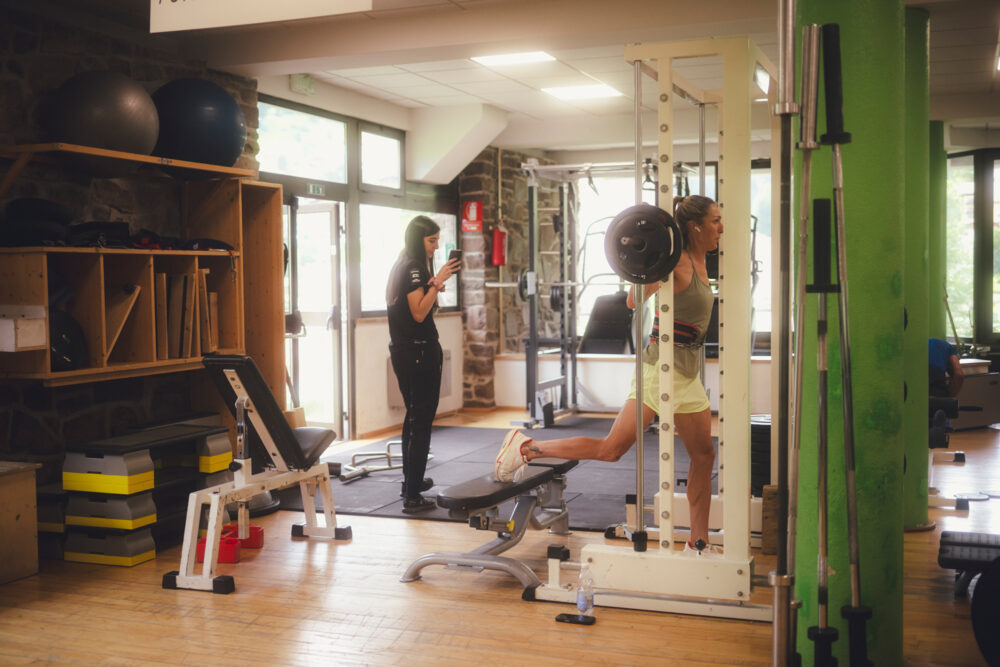
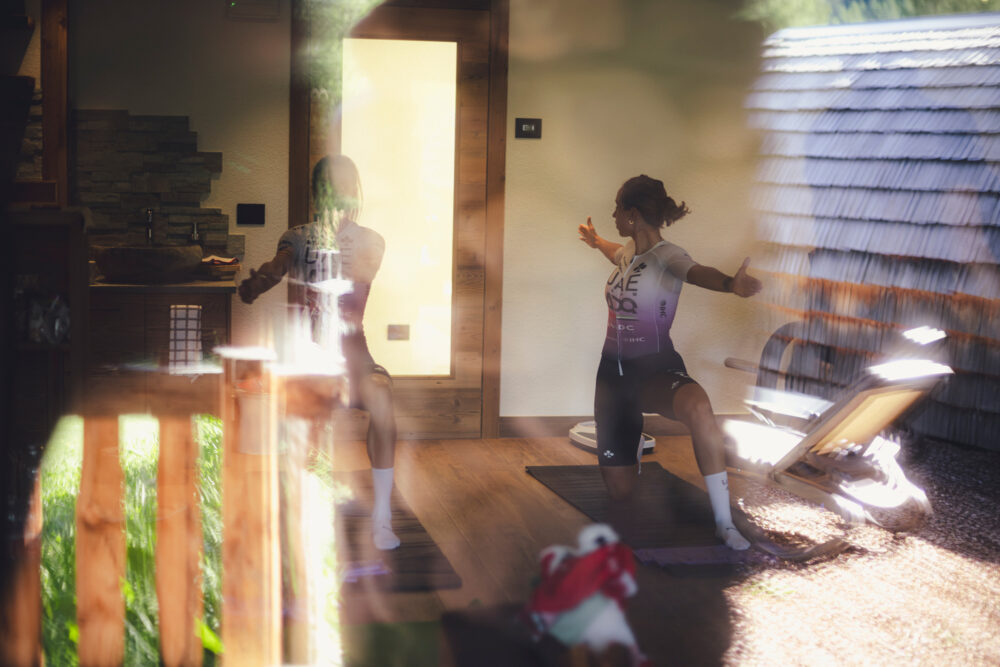
The following morning looks remarkably similar to the first. Breakfast is followed by mobility, then the team splits. Half the riders head down to the valley for a strength and conditioning session in the gym before an easy ride on relatively flat roads, while Elisa stays behind for physiological testing, comparing another set of numbers against earlier in the season. There is very little drama to any of it. Preparation, at this level, is rarely dramatic. It's measured, repetitive and relentlessly consistent, built on the understanding that nothing important happens just once.
By the time UAE Team ADQ leaves the mountains, the routine will have become instinctive. Riders, coaches and staff will all have settled into the rhythm they'll need for nine consecutive days of racing.
The Tour hasn't started yet. But after spending 24 hours inside the camp, one thing becomes surprisingly clear: performance isn't built during races nearly as much as it's built between them. It's built over breakfast conversations and health checks. In mechanics' workshops and soigneurs' treatment rooms. In carefully measured lunches, cold plunges and massages repeated day after day.
None of those moments will ever appear in the race highlights. Together, they might just make the difference in winning the yellow jersey.